

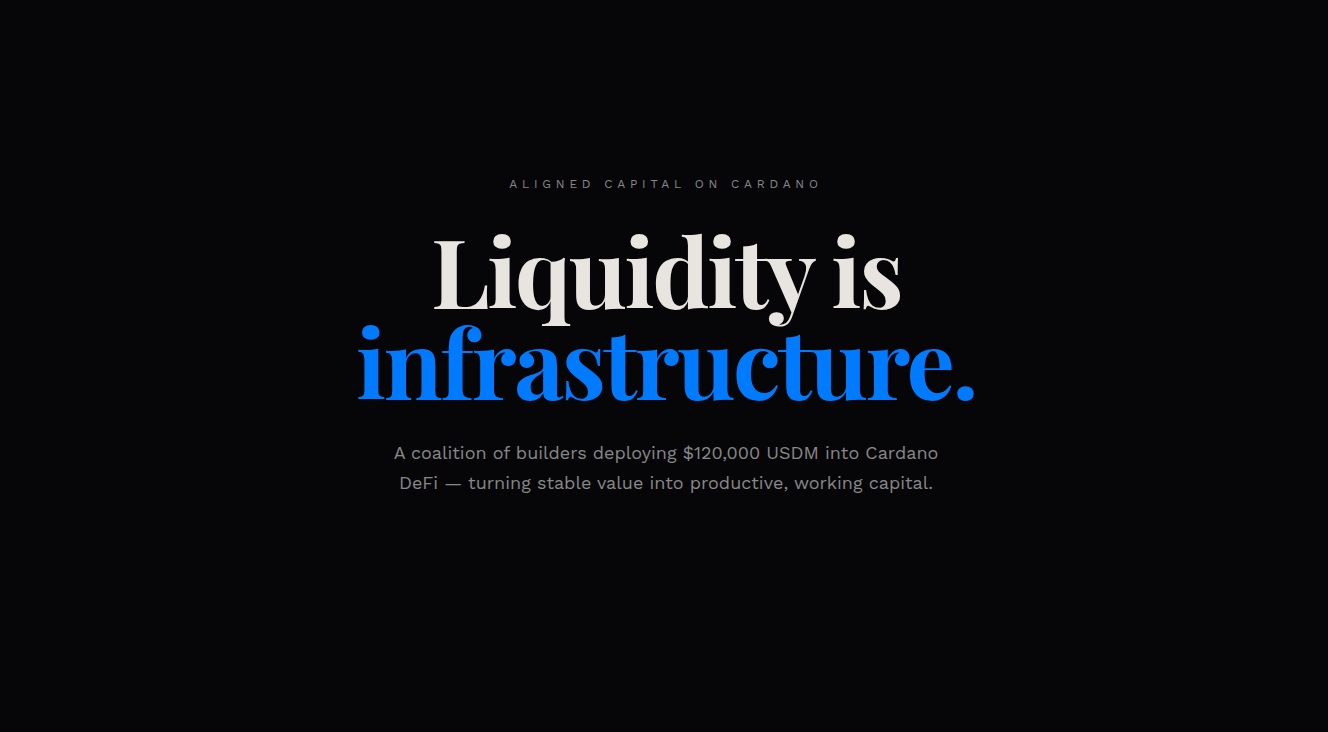
In March 2026, a group of ecosystem participants launched the USDM DeFi Coalition pilot program, a coordinated initiative aimed at accelerating USDM adoption across Cardano’s DeFi landscape.
The coalition brings together several key participants:
- Norwegian Block Exchange (NBX)
- FluidTokens / Fluid Lending Protocol
- Wave Digital (Wave Financial)
- Plomin Legacy Fund
Together, they are deploying USDM liquidity directly into lending markets to strengthen Cardano’s DeFi infrastructure.
Goals of the Pilot
The initiative focuses on several ecosystem objectives:
- Increasing stablecoin liquidity - Coalition members are supplying USDM liquidity to lending markets on Fluid, improving market depth and reducing friction for users.
- Lowering borrowing costs - Deeper liquidity helps stabilize interest rates and improve borrowing conditions across the ecosystem.
- Encouraging real on-chain activity - The pilot includes incentives for users who borrow through the protocol, encouraging practical usage rather than speculative liquidity spikes.
- Establishing USDM as productive capital - The coalition aims to position USDM as a core liquidity asset for DeFi strategies, including lending, leverage, and real-world asset integrations.
In essence, the program attempts to move USDM from being just a stablecoin token to becoming an active financial primitive within Cardano’s DeFi stack.
Why This Matters for the Cardano Ecosystem
The USDM DeFi Coalition represents more than a simple liquidity program. It signals a shift toward coordinated ecosystem growth.
Deeper DeFi Liquidity
One of the most important ingredients for thriving DeFi markets is deep and reliable liquidity. Without it, lending markets remain shallow and borrowing costs become unpredictable.
Deploying stablecoin liquidity into lending protocols like Fluid helps build the financial plumbing needed for larger-scale activity.
Institutional and Regulated Infrastructure
USDM’s structure, issued by regulated entities and backed by real-world assets, makes it attractive to institutions exploring blockchain-based finance.
This regulatory alignment may enable:
- institutional liquidity providers
- compliant fiat on/off ramps
- integration with traditional financial services
That combination is critical for bridging traditional finance and decentralized finance.
Native Cardano Financial Infrastructure
Historically, many DeFi ecosystems relied heavily on bridged stablecoins such as USDT or USDC from other blockchains.
USDM offers something different:
- native issuance on Cardano
- ledger-level token transfers
- transparent reserve verification
This strengthens Cardano’s ability to function as a self-contained financial ecosystem.
A Foundation for Future Applications
With reliable stable liquidity, new categories of applications become possible:
- tokenized real-world assets (RWAs)
- decentralized lending markets
- payment rails and merchant adoption
- DAO treasuries and governance funding
Stablecoins like USDM effectively become programmable digital dollars for the Cardano economy.
The Road Ahead
The launch of the USDM DeFi Coalition pilot program marks an important milestone in the maturation of Cardano’s financial ecosystem. By coordinating liquidity, incentives, and infrastructure development, the initiative aims to transform USDM into a foundational asset across Cardano’s DeFi landscape.
If successful, the program could significantly expand stablecoin liquidity, reduce borrowing costs, and attract more builders and users to Cardano-based financial applications.
In many ways, stablecoins determine how functional a blockchain economy can become. With USDM and initiatives like the DeFi Coalition, Cardano is steadily building the monetary infrastructure needed to support a vibrant and sustainable on-chain financial system.
Projects mentioned in this Article

USDM
Cardano's Premiere Fiat-backed Stablecoin.
